House Graphics for Crafts: A Designer's Review
As a brand designer who spends most of my week refining visual identities for local businesses, I am constantly on the hunt for graphic design assets that offer more than just decorative value. Recently, I evaluated a specific set titled House to see if it could serve as the cornerstone for a new client project. The client is a boutique home decor and candle shop looking to refresh their small business branding with something that feels both rooted and welcoming. My goal was to determine if this asset could elevate their packaging design and create a stronger emotional connection with their community.
First Impressions and Brand Personality
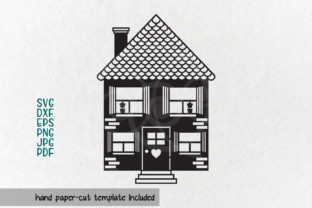
Upon opening the files, the immediate impression of House is one of stability and warmth. The silhouette is clean yet distinctive, avoiding the overly generic clipart styles often found in saturated markets. It suggests a brand personality that is trustworthy, domestic, and inviting. For a local business, especially one in the home goods or food sector, this mood is invaluable. It does not scream "luxury minimalist" nor does it feel excessively playful; instead, it strikes a balance that feels handmade and organic. This makes it an excellent candidate for businesses wanting to project authenticity. Whether used for a bakery's storefront signage or a skincare brand's label, the icon communicates "home" instantly, which is a powerful psychological trigger for consumers.
Practical Applications in Local Business Design
The versatility of this asset shines when considering real-world applications. In my evaluation for the candle shop, I envisioned House serving multiple roles within their brand identity. Primarily, it works beautifully as a central element in logo design, acting as a recognizable mark that can stand alone or pair with a serif or script font. Beyond the logo, the potential for product label integration is high. Imagine the icon embossed on a wax seal or printed in a single color on a kraft paper tag.
Furthermore, the asset extends well into marketing visuals and promotional materials. It can be scaled down for social media profile pictures or used as a recurring motif on thank-you cards included in online orders. For seasonal campaigns, such as holiday gift sets, the House graphic can be adapted into pattern work for wrapping paper or box sleeves. It also serves effectively in editorial design for lookbooks or menu graphics, providing a consistent visual anchor that guides the customer's eye through the content. The ability to use it across social media graphics, website banners, and physical printable design elements ensures a cohesive brand experience.
Elevating Product Presentation and Trust
One of the most critical aspects of professional branding is the ability to create a strong first impression. Using a well-crafted icon like House contributes significantly to better product recognition. When a customer sees the same distinct symbol on a flyer, an Instagram ad, and the actual product packaging, it reinforces memory and builds trust. This consistency creates a clearer visual hierarchy, telling the customer that the business is established and attentive to detail.
In the context of shelf appeal, a polished icon can make a simple jar or box feel like a premium item. It adds a layer of sophistication that generic text alone cannot achieve. For handmade business owners, this is crucial; it bridges the gap between "hobbyist" and "professional brand." The emotional connection fostered by a warm, home-centric icon can be the deciding factor for a customer choosing between two similar products on a shelf.
Ideal Use Cases for Maximum Impact
Based on my review, House works best when utilized as a hero graphic or a decorative brand element. It is particularly effective on:
- Product Labels: As the primary focal point on front-facing packaging.
- Packaging Accents: Printed on tissue paper, stickers, or hang tags.
- Promotional Banners: Used in digital ads to quickly convey the nature of the business.
- Product Mockups: Enhancing digital presentations to show how the brand looks in situ.
- Seasonal Packaging: Adapted for limited edition runs or holiday specials.
- Boutique Visuals: Integrated into store signage or window displays.
Where to Exercise Caution
While versatile, this asset is not a one-size-fits-all solution. Designers should use House carefully in formal corporate branding where a more abstract or typographic approach might be required. It may also struggle on very small labels where fine details could get lost during printing. Avoid placing it in crowded product packaging layouts where it might compete with essential legal information or ingredient lists. Additionally, for luxury minimalist brands that rely on excessive negative space and ultra-thin typography, this icon might feel too literal or heavy. It is also important to ensure sufficient contrast; using it on low-contrast backgrounds can render it invisible and weaken the brand presence.
Designer Notes and Technical Evaluation
From a technical standpoint, the file formats provided are robust for various production needs. The inclusion of SVG design files is a significant plus, allowing for infinite scalability without loss of quality, which is essential for large format printing like banners or vehicle wraps. The DXF files indicate compatibility with cutting software like Cricut and Silhouette, making this asset highly valuable for creating physical die-cut stickers, stencils, or heat transfers for apparel.
Before finalizing any commercial design project, I always recommend a few practical steps. First, test the graphic on real product mockup templates to see how it interacts with different textures and lighting. Second, check its performance in black and white to ensure it remains legible for faxed documents or single-color print runs. Third, preview it at small sizes to confirm that the lines do not blur. It is also wise to test the icon beside various typefaces—serif, sans serif, script, and display fonts—to find the perfect pairing that matches the brand voice. Finally, always review the licensing terms to confirm you have a valid commercial license for client work and physical product sales.
In conclusion, House is a solid addition to a designer's toolkit, particularly for those crafting identities for local shops and artisanal brands. Its ability to convey warmth and stability makes it a strategic choice for building a memorable and trustworthy brand presence in a competitive market.